


Tatami Collection
Emi Tatami Mat
Emi Tatami Mat
 Made in Japan
 Natural Hygienic
 Water Repellent
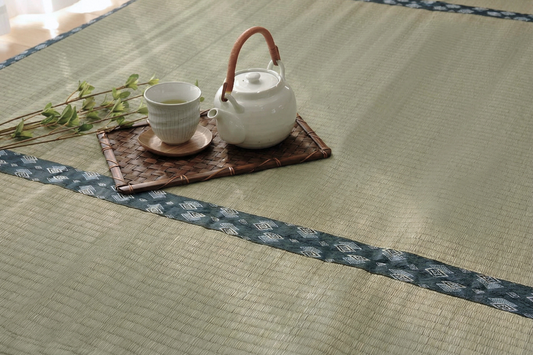
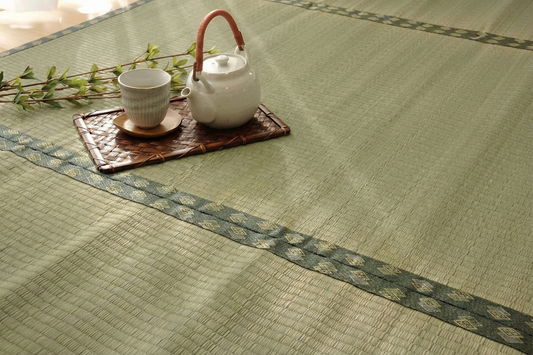
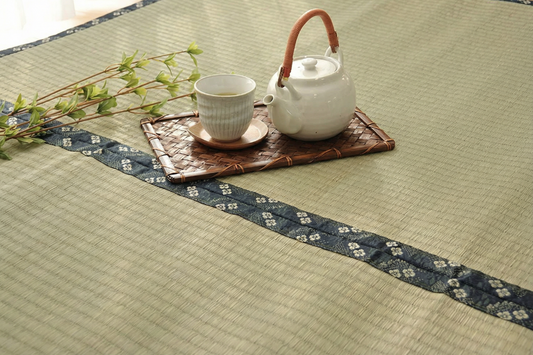
Emi is a Japandi tatami mat woven in a slate-blue geometric diamond border, made in Japan from 100% Kyushu-grown igusa rush grass. Reversible and foldable for practical, long-term use, it brings quiet structure to a living room or bedroom.


What is Tatami?
-

More than a Floor
A tatami mat changes how a room feels before you've placed a single thing on it. Laid over your existing floor, Emi brings the stillness of a Japanese interior into everyday living, no renovation, no permanence, just a quieter way to begin the day.
-

Woven in Kyushu
Every Tatami mat is woven from Japanese igusa, grown in Kyushu and shaped by craftsmanship refined over more than a century. The double weave gives it a fine, even surface that feels smooth underfoot and holds its shape for years.
-

It Ages, It Doesn't Wear Out
Fresh igusa is a soft green that deepens to warm gold with time. Rather than fading, Emi settles into a quieter, richer tone, gaining the kind of character that only comes from being lived with.
-

The Whole Room
Tatami mat is designed to sit within a complete Japandi space, tatami underfoot, wallpaper behind, and wall art above. Each piece is composed to work with the others, so the room feels considered as a whole rather than decorated in parts.


Our tatami products are made using natural igusa, also known as Japanese rush grass. Igusa has been used in traditional Japanese interiors for centuries due to its durability, subtle fragrance, and functional benefits.
In Japan. Each mat is made in Kyushu by craftsmanship refined over more than a century in tatami.
Yes. Igusa is naturally breathable, helping to regulate humidity and absorb unwanted odours for a fresher, calmer indoor atmosphere.
Yes. Tatami rugs can be placed directly on most flooring surfaces. Structured tatami mats often include anti-slip backing for stability. However, we recommend placing them on clean, dry floors.
No. The underside is finished with a non-woven anti-slip backing, designed specifically for use on wooden flooring. The mats remain stable during daily use and can also be placed on existing tatami floors.
Yes. The surface is treated with a natural antibacterial and deodorising finish from Aomori hiba wood, gentle to people and the room around it. Its breathable, soft character suits bedrooms and children's spaces well.
Wipe light spills with a dry cloth and air it occasionally. The water-repellent finish keeps everyday care simple. Avoid prolonged direct sunlight to preserve the colour. Tatami ages naturally and develops character over time.
Yes. This is not a defect.
Igusa is a natural plant material. Because it is organic, it behaves differently from synthetic fibres. During weaving or over time with use, small fibres may occasionally appear to lift or protrude slightly from the surface. In Japan, this is referred to as “igusa cutting” and is a natural characteristic of woven rush grass.
If this occurs, simply trim the protruding fibre gently at the base using small scissors or nail clippers. Do not pull it.
After trimming, smooth the surface lightly with your hand along the weave direction. The area will blend naturally into the surrounding weave.
This does not affect durability, structure, or performance of the tatami.
Made to Order, Never to Waste
You May Like
-

 Sold out
Emi Tatami Mat
Regular price From ¥55,773 JPYRegular priceUnit price per -

 Sold out
Matsu Tatami Mat
Regular price From ¥55,773 JPYRegular priceUnit price per -

 Sold out
Baika Tatami Mat
Regular price From ¥55,773 JPYRegular priceUnit price per


